
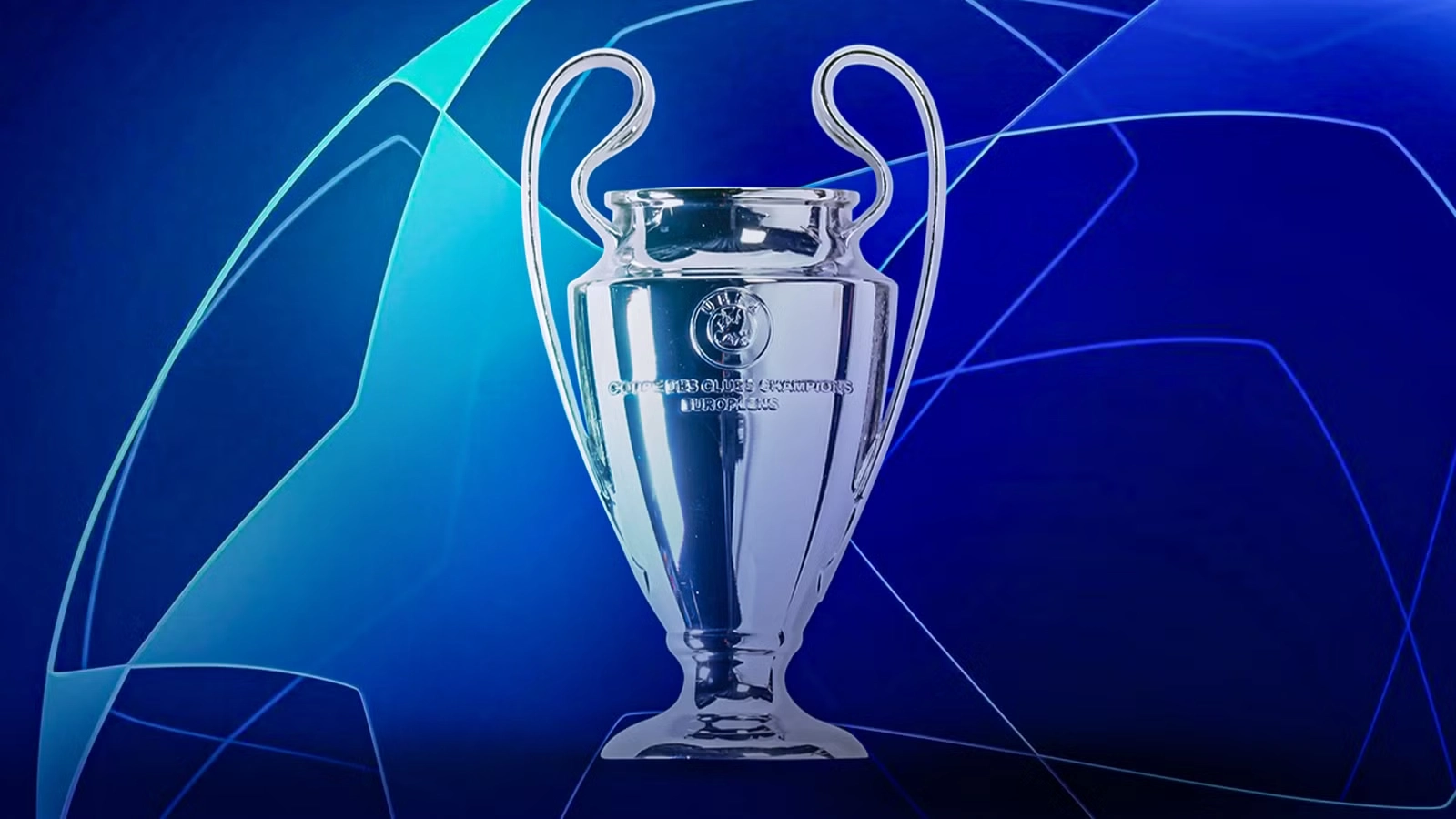
The night a team wins the UEFA Champions League is the night they join soccer’s most exclusive club. From Real Madrid’s legendary five consecutive titles in the competition’s earliest years to Paris Saint-Germain’s demolition of Inter Milan in the 2024-25 final, the Champions League has produced more drama, more iconic moments, and more unforgettable soccer than any other club competition on earth.
But for newer fans the competition can feel complicated. How do teams qualify? What is the league phase? How does the knockout stage work? And why does the anthem send chills down every soccer fan’s spine?
This guide explains everything about the UEFA Champions League from the ground up.
What is the UEFA Champions League?
The UEFA Champions League is the most prestigious club soccer competition in the world. Organised by UEFA, the governing body of European soccer, it brings together the best clubs from across Europe’s domestic leagues to compete for the most coveted prize in club football.
The competition runs from July through to late May or early June of the following year, meaning it overlaps almost entirely with the domestic league seasons in each participating country. Clubs compete in both their national leagues and the Champions League simultaneously, making a successful run through the Champions League one of the most physically and tactically demanding achievements in the sport.
Winning the Champions League is considered by many clubs and players to be the ultimate achievement in club soccer. For players like Cristiano Ronaldo, who made winning the Champions League a defining goal of his career, and for clubs like Real Madrid who built their entire identity around the competition, the trophy represents the absolute summit of the game.
A Brief History: From European Cup to Champions League
The Beginning: 1955
The competition began in the 1955-56 season as the European Champion Clubs’ Cup, conceived in Paris by French journalist Gabriel Hanot and the sports newspaper L’Equipe. The idea was simple: gather the champions of each European national league and let them compete to find the best club in Europe.
The first match in the competition’s history took place on 4 September 1955, ending in a 3-3 draw between Sporting CP of Portugal and Partizan of Yugoslavia. The first goal ever scored in the competition was netted by Joao Baptista Martins of Sporting CP.
Real Madrid won the inaugural tournament and went on to dominate the competition’s early years in extraordinary fashion, winning the first five consecutive titles from 1956 to 1960.
Real Madrid’s 1960 Final: The Greatest Match Ever Played
The 1960 European Cup final between Real Madrid and Eintracht Frankfurt at Hampden Park in Glasgow is widely regarded as one of the greatest matches in soccer history. Real Madrid won 7-3 in front of over 127,000 fans. Alfredo Di Stefano scored a hat-trick and Ferenc Puskas scored four goals. A decade later, many of those present still described it as the finest display of attacking soccer they had ever seen.
The Competition Spreads Across Europe
From the mid-1960s onwards the competition became more competitive as clubs from across Europe developed the quality to challenge Real Madrid’s dominance. Benfica of Portugal won back-to-back titles in 1961 and 1962. Inter Milan and AC Milan dominated in the Italian style in the mid-1960s. Celtic became the first British club to win the European Cup in 1967, followed by Manchester United in 1968. Ajax won three consecutive titles in the early 1970s and Bayern Munich did the same from 1974 to 1976. Liverpool then led a period of English dominance through the late 1970s and early 1980s.
The 1985 Heysel Stadium Disaster
The 1985 European Cup final between Liverpool and Juventus ended in tragedy when 39 people, mostly Juventus supporters, died in a crush at the Heysel Stadium in Brussels before the match. The disaster led to all English clubs being banned from European competition for five years, with Liverpool banned for six.
The Rebrand: 1992
In 1992 UEFA rebranded the European Cup as the UEFA Champions League, expanding the competition beyond just domestic league champions to include clubs that finished in the top positions of their national leagues but did not win the title outright. The commercial structure was also significantly overhauled, bringing in broadcast deals and sponsorship arrangements that transformed the financial scale of the competition almost overnight.
The famous Champions League anthem, composed by Tony Britten and based on George Frideric Handel’s Zadok the Priest, was introduced at the same time and became one of the most instantly recognisable pieces of music in world sport.
The Modern Era
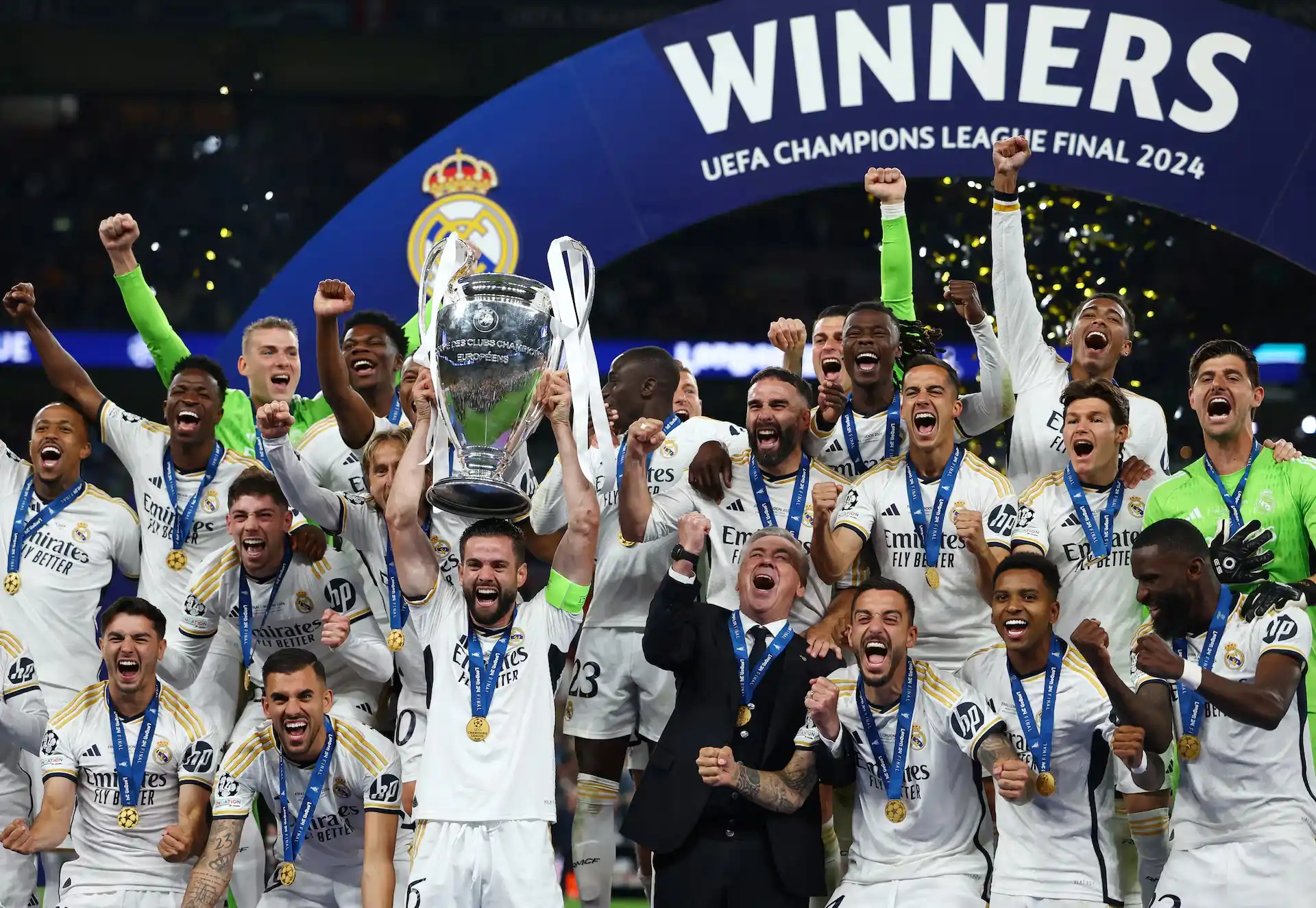
The modern Champions League has been defined by an ongoing battle between Real Madrid, Barcelona, Bayern Munich, and a changing cast of challengers. Real Madrid’s dominance has been particularly remarkable, with the club winning the competition 15 times in total, including three consecutive titles under Zinedine Zidane from 2016 to 2018.
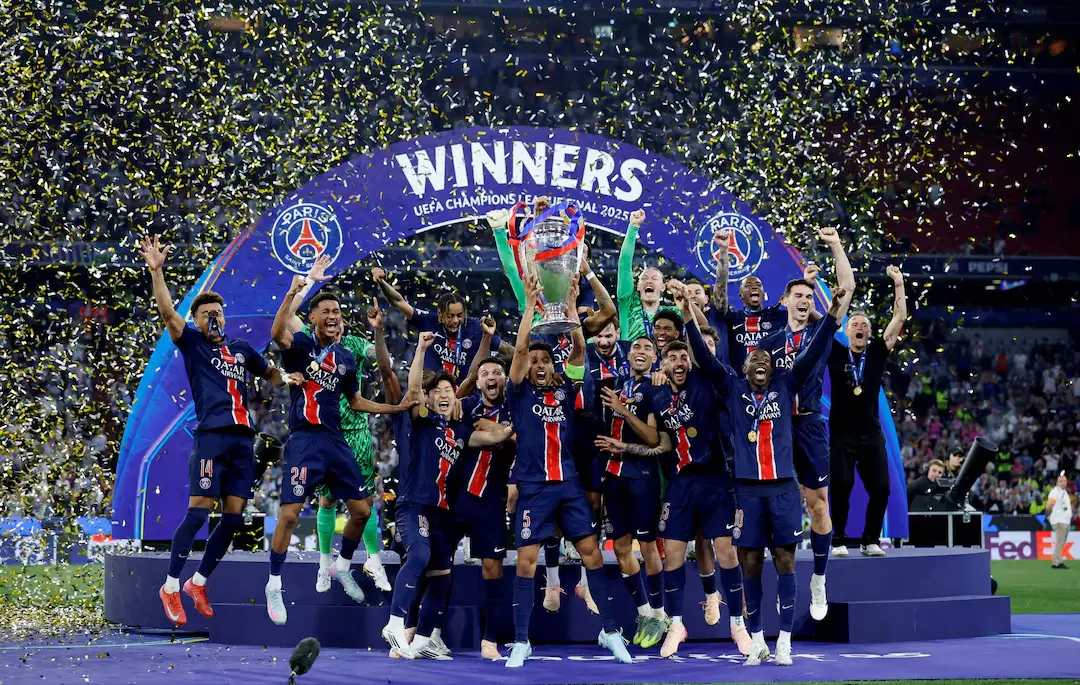
PSG ended years of near-misses to claim their first ever Champions League title in 2024-25, thrashing Inter Milan 5-0 in the final at the Allianz Arena in Munich. It was the biggest winning margin in Champions League final history and signalled a new force at the top of European club football.
The Current Format: How the Champions League Works
The Champions League underwent significant format changes starting from the 2024-25 season. Understanding the current structure is essential for following the competition properly.
How Teams Qualify
Teams qualify for the Champions League based on their performance in their domestic leagues the previous season. Each UEFA member country is allocated a certain number of Champions League places depending on their UEFA coefficient, a ranking system that reflects how well that country’s clubs have performed in European competition over the previous five years.
The top leagues in Europe, primarily the Premier League, La Liga, Serie A, Bundesliga, and Ligue 1, receive the most places. England’s Premier League currently sends six clubs to the Champions League, reflecting the league’s strong UEFA coefficient.
The reigning Champions League winners and reigning UEFA Europa League winners also receive guaranteed places if they would not otherwise qualify through their domestic league.
Qualifying Rounds
Clubs from smaller leagues and lower-ranked associations must go through qualifying rounds in July and August before reaching the main competition. These early rounds operate on a two-legged home-and-away basis, with the aggregate score across both legs determining which team progresses. A club that loses in the qualifying rounds may drop into the UEFA Europa League or UEFA Conference League depending on which round they exit.
The League Phase
Starting from 2024-25, the old group stage format was replaced by a league phase featuring 36 clubs. Each club plays eight matches during the league phase, four at home and four away, against a variety of opponents drawn from different seeding pots.
The eight matches run across eight matchdays spread between September and January. The league phase produces a single ranking table of all 36 clubs based on points accumulated across those eight matches.
How Teams Progress from the League Phase
At the end of the league phase:
The top eight clubs in the table qualify automatically for the Round of 16 without playing any further matches.
Clubs ranked 9th through 24th enter a knockout round playoff, where they play two-legged ties to compete for the remaining Round of 16 places. The 9th through 16th ranked clubs are seeded for these playoffs and play their second legs at home.
Clubs ranked 25th through 36th are eliminated from European competition entirely and do not drop into the Europa League.
The Knockout Stage
From the Round of 16 onwards the competition operates as a straight knockout tournament using two-legged ties. Each round involves a home and away leg, with the aggregate score across both matches determining the winner. If the aggregate score is level after both legs, extra time and a penalty shootout decide who progresses.
| Round | Teams Remaining |
|---|---|
| Round of 16 | 16 clubs |
| Quarter-finals | 8 clubs |
| Semi-finals | 4 clubs |
| Final | 2 clubs |
The final is played as a single match at a pre-determined neutral venue, chosen by UEFA years in advance.
The 2026-27 Season
The 2026-27 Champions League entered its 72nd season, its 35th under its current name and its third under the league phase format. The competition kicked off on 7 July 2026 with qualifying rounds and concludes with the final at the Estadio Metropolitano in Madrid on 5 June 2027.
PSG are the reigning holders heading into the 2026-27 season, while the league phase draw placed them in a section alongside Barcelona and Manchester City, creating what many analysts considered the most difficult path of any club in the competition.
The Champions League Trophy
The UEFA Champions League trophy is one of the most recognisable objects in world sport. The current trophy stands 73.5 centimetres tall and weighs 7.5 kilograms. It is made of sterling silver and features a distinctive large round base with handles on each side.
Clubs that win the Champions League three times consecutively or five times in total are awarded a badge of honour to wear on their shirt, recognising their status as multiple winners of the competition. Real Madrid, Ajax, Bayern Munich, and Liverpool have all earned this honour.
The original trophy was retired in 2009 and replaced with a replica. Winning clubs keep the trophy for a year before returning it, but are given a full-size replica to keep permanently.
Most Successful Clubs in Champions League History
Real Madrid’s dominance of the competition across seven decades is without parallel in soccer history. Their 15 titles are more than double the total of the second most successful club.
| Club | Country | Titles | Most Recent Win |
|---|---|---|---|
| Real Madrid | Spain | 15 | 2024 |
| AC Milan | Italy | 7 | 2007 |
| Liverpool | England | 6 | 2019 |
| Bayern Munich | Germany | 6 | 2020 |
| Barcelona | Spain | 5 | 2015 |
| Ajax | Netherlands | 4 | 1995 |
| Internazionale | Italy | 3 | 2010 |
| Manchester United | England | 3 | 2008 |
| PSG | France | 1 | 2025 |
Spain has produced the most Champions League winning clubs, with Real Madrid and Barcelona’s combined totals giving the country more European Cup and Champions League titles than any other nation.
Most Memorable Moments in Champions League History
Real Madrid 7-3 Eintracht Frankfurt: 1960
The greatest European Cup final ever played. Di Stefano and Puskas combined to produce a performance of attacking soccer that nobody present ever forgot.
Manchester United’s Injury Time Comeback: 1999
Trailing Bayern Munich 1-0 with the final in its closing seconds, United scored twice in added time through Teddy Sheringham and Ole Gunnar Solskjaer to win 2-1 and complete a historic treble. It remains the most dramatic finish to a Champions League final in the competition’s history.
Liverpool 3-3 AC Milan: 2005 (Istanbul)
Liverpool were 3-0 down at half-time of the final against AC Milan in Istanbul and appeared to have no chance of winning. They scored three goals in the second half to level the match and then won on penalties. It is universally known among soccer fans simply as the Miracle of Istanbul.
Real Madrid’s Three in a Row: 2016 to 2018
Under Zinedine Zidane, Real Madrid won three consecutive Champions League titles, a feat no club had achieved in the modern era. Their 4-1 demolition of Juventus in the 2017 final was one of the most complete performances ever produced in a Champions League final.
PSG 5-0 Inter Milan: 2025
PSG ended years of heartbreak with the most emphatic final victory in the competition’s history. Goals from Hakimi, Doue, Kvaratskhelia, and Mayulu produced a dominant display that surprised even the most confident PSG supporters. Luis Enrique became only the second manager to win a treble at two different clubs.
Why the Champions League Matters So Much
The Money
Participating in the Champions League is one of the most financially significant things that can happen to a soccer club. The prize money, commercial revenue, and broadcasting fees generated by a deep run in the competition can transform a club’s financial position. Clubs that win the Champions League earn hundreds of millions of euros in prize money and commercial income across the season.
The Players
The Champions League anthem has become shorthand for the highest level of club soccer. Players describe walking out to the anthem as one of the most spine-tingling moments of their careers. For many of the world’s best players, winning the Champions League is the goal that drives everything else.
The History
Every Champions League match is played against a backdrop of extraordinary history. When Arsenal face Real Madrid, both clubs know that Madrid have won the competition 15 times. When Liverpool play in Europe, their supporters think of Istanbul. The competition carries its history into every match in a way that few sporting events can match.
How to Follow the Champions League
In the United States
Paramount Plus is the home of Champions League coverage in the United States, broadcasting matches live throughout the competition. CBS also provides extensive Champions League coverage across its platforms.
In the United Kingdom
TNT Sports holds the UK Champions League rights, with every match available through the Discovery Plus streaming platform. The competition’s biggest matches draw enormous television audiences across Britain.
Globally
Most countries have dedicated Champions League broadcast partners. UEFA’s official website and app also provide live scores, statistics, and detailed match information for every game throughout the competition.
Frequently Asked Questions
How does a team qualify for the Champions League?
Teams qualify by finishing in the top positions of their domestic league at the end of the previous season. The exact number of places available to clubs from each country depends on that country’s UEFA coefficient ranking. Teams from lower-ranked countries may need to win qualifying matches before reaching the main competition.
How many teams are in the Champions League?
The current format features 36 clubs in the league phase, expanded from 32 clubs in the old group stage format. Additional clubs participate in qualifying rounds before the league phase begins.
Who has won the Champions League the most times?
Real Madrid have won the Champions League 15 times, more than any other club in the competition’s history. Their first title came in the inaugural 1955-56 season and their most recent was in 2024.
What is the Champions League anthem?
The Champions League anthem is a choral piece composed by Tony Britten, based on George Frideric Handel’s Zadok the Priest. It was introduced in 1992 when the competition was rebranded from the European Cup to the UEFA Champions League and is played before every match. The opening notes are instantly recognisable to soccer fans worldwide.
Who are the current Champions League holders?
Paris Saint-Germain are the reigning Champions League holders, having won the 2024-25 edition by defeating Inter Milan 5-0 in the final at the Allianz Arena in Munich. It was PSG’s first ever Champions League title and the largest winning margin in final history.
When and where is the 2026-27 Champions League final?
The 2026-27 Champions League final will be played on 5 June 2027 at the Estadio Metropolitano in Madrid, home of Atletico Madrid.
Can clubs from outside Europe play in the Champions League?
No. The Champions League is exclusively for clubs from UEFA member associations, meaning European clubs only. The equivalent competition for the best clubs from around the world is the FIFA Club World Cup, which Champions League winners automatically qualify for.
What happens to teams that finish bottom of the league phase?
Clubs ranked 25th through 36th at the end of the league phase are eliminated from European competition entirely. They do not drop into the Europa League, which is a significant change from previous formats where bottom-placed clubs would transfer to the second-tier competition.