

The FIFA World Cup 2026 was the most ambitious and most watched edition of the tournament in history. Played across 16 cities in three countries from June 11 to July 19, 2026, it was the first World Cup to feature 48 teams, the first hosted across three nations simultaneously, and one of the most dramatic tournaments the sport has ever seen.
Spain lifted the trophy for the second time in their history, defeating Argentina 1-0 after extra time in the final at MetLife Stadium in New Jersey. The tournament produced remarkable individual performances, memorable upsets, and a format that tested teams and fans alike over 104 matches spanning 38 days.
This is the complete guide to everything that happened.
Key Facts at a Glance
| Detail | Information |
|---|---|
| Host nations | United States, Canada, Mexico |
| Dates | June 11 to July 19, 2026 |
| Teams | 48 |
| Matches | 104 |
| Host cities | 16 |
| Final venue | MetLife Stadium, New Jersey |
| Champions | Spain |
| Runners-up | Argentina |
| Third place | England |
| Fourth place | France |
| Golden Ball | Rodri (Spain) |
| Golden Boot | Kylian Mbappe (France) 10 goals |
| Golden Glove | Unai Simon (Spain) |
| Best Young Player | Pau Cubarsi (Spain) |
The Host Nations and Venues
A Historic Three-Country Tournament
The 2026 World Cup made history as the first ever to be jointly hosted by three nations. The United States, Canada, and Mexico came together under the United 2026 bid to create a tournament spread across an enormous geographic area, with matches played in 16 cities from Vancouver in the northwest to Mexico City in the south.
Mexico became the first country in history to host the World Cup three times, having previously held the tournament in 1970 and 1986. Canada hosted the men’s World Cup for the first time. The United States returned as host for the first time since 1994.
The 16 Host Cities
United States (11 cities)
The bulk of the tournament was played across eleven American cities, with most venues being converted NFL stadiums. MetLife Stadium in East Rutherford, New Jersey hosted the final with 82,500 seats allocated for the match, making it the largest venue in the tournament.
Other US host cities included New York/New Jersey, Los Angeles, Dallas, San Francisco, Miami, Seattle, Boston, Atlanta, Houston, Kansas City, and Philadelphia.
Canada (2 cities)
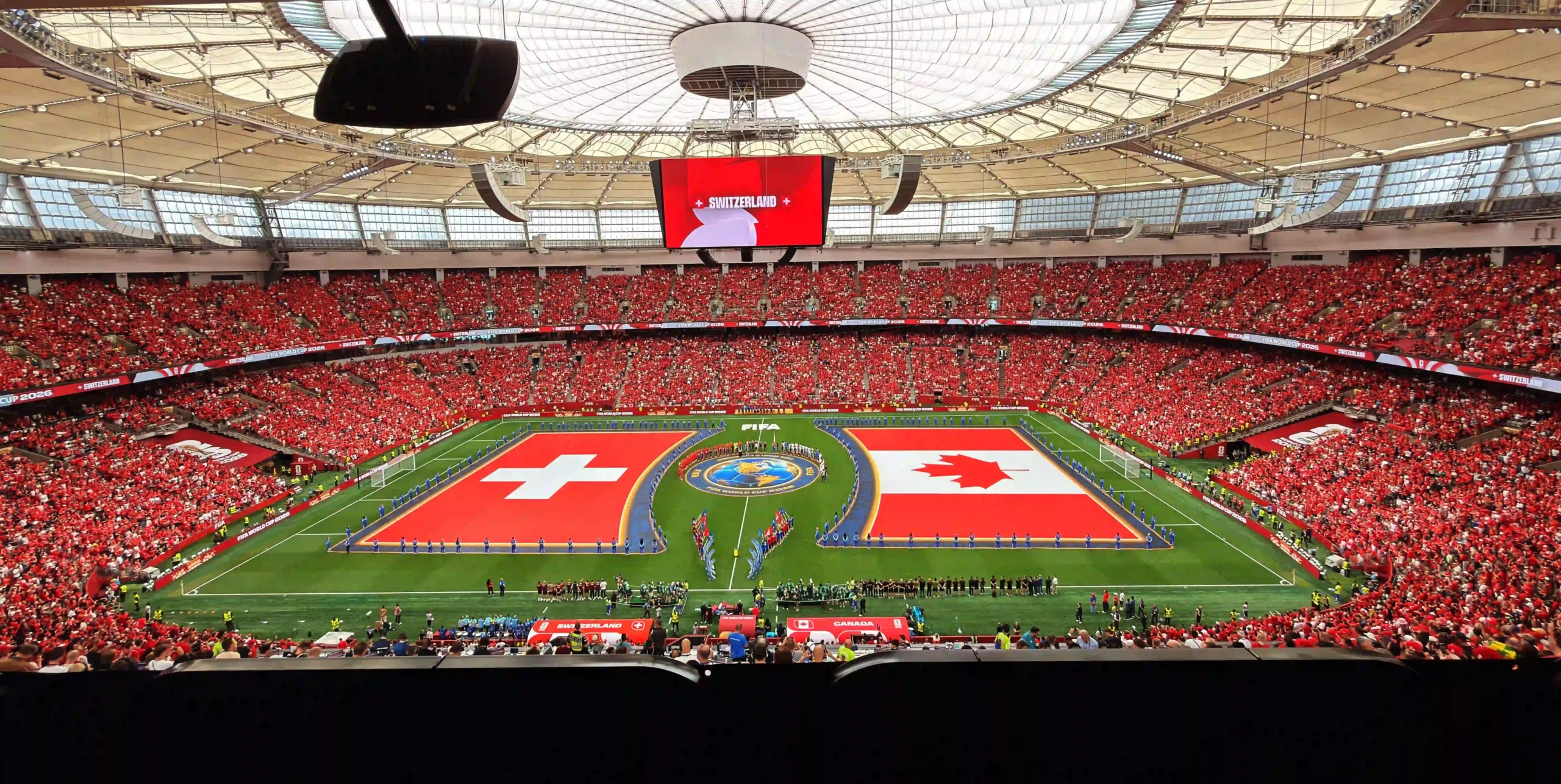
Toronto and Vancouver both hosted World Cup matches for the first time, with both cities embracing the tournament as a major cultural and sporting event.
Mexico (3 cities)
Mexico City, Guadalajara, and Monterrey all hosted matches. The legendary Estadio Azteca in Mexico City, which has hosted World Cup matches in both 1970 and 1986, welcomed tournament football once again for an unprecedented third time.
The New 48-Team Format Explained
The most talked-about change heading into the 2026 World Cup was the expansion from 32 teams to 48. This was the biggest format change in World Cup history and significantly altered the structure of the tournament.
How the Group Stage Worked
The 48 teams were divided into 12 groups of four teams each, labelled Group A through Group L. The top two teams from each group, plus the eight best third-placed teams from across all groups, advanced to the knockout stage.
This meant that 32 of the 48 teams progressed from the group stage, giving more nations a genuine chance of reaching the knockout rounds.
The New Round of 32
The introduction of the Round of 32 was entirely new to the World Cup. Previously the format went directly from the group stage to a Round of 16. The extra round meant more matches and more opportunity for drama before the competition reached the familiar quarter-final stage.
Knockout Stage Structure
| Round | Teams Remaining | Matches |
|---|---|---|
| Round of 32 | 32 | 16 |
| Round of 16 | 16 | 8 |
| Quarter-finals | 8 | 4 |
| Semi-finals | 4 | 2 |
| Third-place match | 2 | 1 |
| Final | 2 | 1 |
The total of 104 matches compared to 64 at the 2022 World Cup in Qatar reflected both the larger number of teams and the additional knockout round.
How the Tournament Unfolded
Group Stage
The group stage ran from June 11 to June 28, producing 72 matches across the 16 host cities. The expanded format meant that every matchday was packed with fixtures across multiple venues and time zones.
The new format gave smaller nations more opportunity to make an impact. Scotland, who qualified for the World Cup for the first time in decades, won their opening match against Haiti, capturing significant attention across the tournament’s early days.
Argentina entered as defending champions and were among the pre-tournament favourites alongside France, England, Spain, and Brazil. All five navigated the group stage successfully, setting up the expectation of a thrilling knockout phase.
The Knockout Rounds
The Round of 32 and Round of 16 gradually reduced the field from 32 to the eight quarter-finalists, with several notable eliminations along the way. Morocco, ranked seventh in the world heading into the tournament, continued their tradition of punching above their weight in major competitions and made the quarterfinals.
The eight teams who reached the quarterfinals were among the strongest nations in world soccer, with the path to the final producing some of the most memorable soccer of the entire tournament.
The Semi-finals
The two semi-finals produced contrasting results but equal drama.
Spain defeated France with goals in each half to secure their place in the final. It was a commanding performance from La Roja against one of the pre-tournament favourites, and it announced Spain as clear favourites heading into the final weekend.
Argentina struck twice late on to overturn England’s lead and reach the final. The dramatic late comeback was vintage Argentina and set up the prospect of a rematch of the 2022 World Cup final, with the same two nations meeting again at the summit of the sport.
The Third-Place Match
The bronze medal match produced one of the most extraordinary scorelines in World Cup history. England defeated France 6-4 in a remarkable ten-goal contest, with Bukayo Saka scoring a hat-trick. The result gave England their best World Cup finish since winning the tournament in 1966, and gave Saka a permanent place in English soccer history.
Kylian Mbappe scored twice in the same match, which proved decisive in the race for the Golden Boot. His two goals in the third-place match took his tournament total to 10, pulling him ahead of Lionel Messi in the top scorer standings heading into the final.
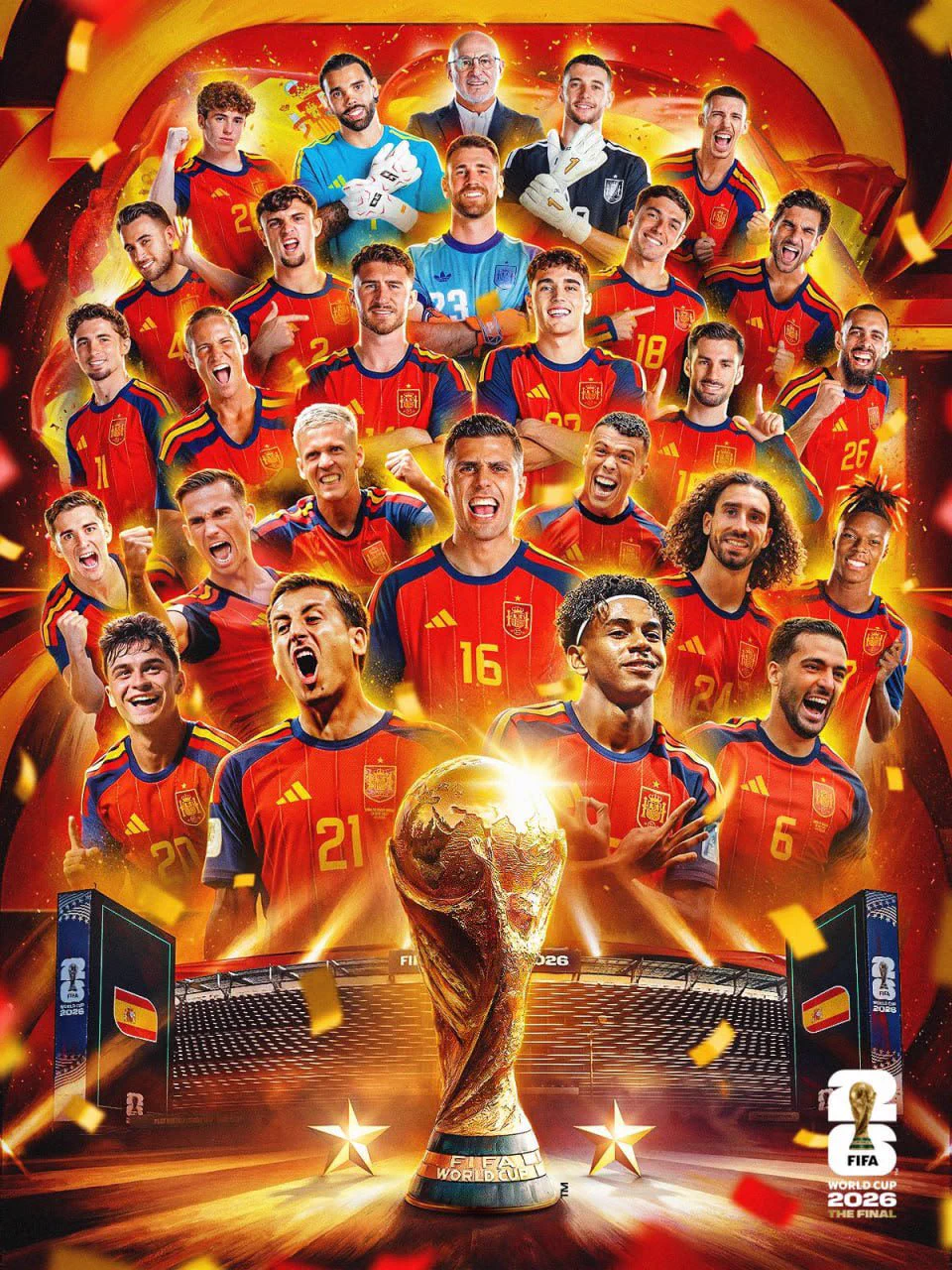
The Final: Spain 1-0 Argentina
The 2026 World Cup final was played on July 19, 2026 at MetLife Stadium in East Rutherford, New Jersey, in front of 82,500 fans with hundreds of millions more watching worldwide.
It was a repeat of the 2022 final in reverse. Where Argentina had defeated France in Qatar, Spain now faced Argentina with the same prize on the line.
The match was tight and tense throughout regulation time. Both teams created chances but neither could find the breakthrough, and the game moved into extra time goalless. It was in extra time that Spain’s Ferran Torres scored the decisive goal, giving La Roja a 1-0 victory and their second World Cup title, 16 years after their first triumph in South Africa in 2010.
Spain made history by becoming the first World Cup-winning team to concede only a single goal throughout the entire tournament. Goalkeeper Unai Simon kept a clean sheet in every match except one, setting a World Cup record of 650 consecutive minutes without conceding.
Argentina were left as runners-up for the second consecutive World Cup, a painful near-miss for a team and a captain in Lionel Messi who had come so close to back-to-back titles.
Tournament Awards
Golden Ball: Best Player
Rodri of Spain won the Golden Ball as the tournament’s best player. The Spain captain orchestrated an almost flawless campaign, controlling matches from central midfield with a combination of passing range, defensive intelligence, and leadership. His influence over Spain’s tournament was a defining reason why La Roja conceded only one goal across eight matches.
Lionel Messi of Argentina won the Silver Ball, acknowledging an outstanding individual tournament despite finishing on the losing side in the final. Kylian Mbappe of France took the Bronze Ball.
Golden Boot: Top Scorer
Kylian Mbappe of France won the Golden Boot with 10 goals, the most any player had scored in a single World Cup since West Germany’s Gerd Muller in 1970. His hat-trick in the third-place match against England proved decisive in the race for the award, pulling him ahead of Messi who finished with eight goals.
The achievement made Mbappe the first player in history to win the World Cup Golden Boot in two consecutive tournaments, having also finished as top scorer at the 2022 World Cup in Qatar.
Mbappe also extended his record as the all-time leading men’s World Cup scorer with 22 career goals across three tournaments.
Golden Glove: Best Goalkeeper
Unai Simon of Spain won the Golden Glove after conceding only one goal in eight matches throughout the tournament. His record of 650 consecutive minutes without conceding was a new World Cup record, and his performances were central to Spain’s defensive dominance throughout the competition.
Best Young Player
Pau Cubarsi of Spain won the Best Young Player award, recognising an outstanding tournament from one of the most exciting young defenders in European soccer.
FIFA Fair Play Award
The Netherlands received the FIFA Fair Play Award for their conduct throughout the tournament.
Spain’s Road to the Title
| Round | Match | Result |
|---|---|---|
| Group stage | Various opponents | Qualified as group winners |
| Round of 32 | Opponent | Won |
| Round of 16 | Opponent | Won |
| Quarter-final | Belgium | Won (Mikel Merino late winner) |
| Semi-final | France | Won 2-0 |
| Final | Argentina | Won 1-0 after extra time |
Spain’s campaign was defined by defensive solidity and collective organisation rather than individual brilliance. They conceded only one goal across eight matches and never looked in serious danger of elimination throughout the tournament.
Top Scorers at the 2026 World Cup
| Player | Country | Goals |
|---|---|---|
| Kylian Mbappe | France | 10 |
| Lionel Messi | Argentina | 8 |
| Jude Bellingham | England | 7 |
Records Set at the 2026 World Cup
The tournament broke or set several notable records across its 38-day duration.
Most teams: 48 nations competed, the largest field in World Cup history.
Most matches: 104 games were played, significantly more than any previous tournament.
Most goals in a bronze final: England 6-4 France was the highest-scoring third-place match in World Cup history with 10 goals.
Consecutive minutes without conceding: Unai Simon’s 650 minute run without conceding set a new World Cup record for a goalkeeper.
Consecutive Golden Boot winner: Mbappe became the first player to win the Golden Boot at back-to-back World Cups.
All-time World Cup scorer: Mbappe extended his record as the men’s all-time World Cup top scorer to 22 goals.
Three-time host nation: Mexico became the first country to host the World Cup three times.
The Impact on Soccer in North America
The 2026 World Cup had a profound effect on the profile of soccer across the United States, Canada, and Mexico. Hosting the tournament across three nations drew enormous local audiences to matches, with American fans in particular engaging with the sport at a level not seen since the 1994 World Cup that introduced many Americans to the game.
MLS attendances and viewing figures grew in the months following the tournament as new fans who had discovered soccer through the World Cup began following their local clubs. The tournament fulfilled its promise as a catalyst for soccer’s continued growth in North America.
FAQ
Who won the FIFA World Cup 2026?
Spain won the 2026 FIFA World Cup, defeating Argentina 1-0 after extra time in the final at MetLife Stadium in New Jersey on July 19, 2026. It was Spain’s second World Cup title, 16 years after their first in South Africa in 2010.
Where was the 2026 World Cup final held?
The final was played at MetLife Stadium in East Rutherford, New Jersey, USA. The stadium hosted 82,500 spectators for the match and was the largest venue used during the entire tournament.
How many teams played at the 2026 World Cup?
48 teams participated in the 2026 World Cup, the largest field in tournament history. This was an expansion from the 32 teams that competed at all previous tournaments from 1998 onwards.
Who was the best player at the 2026 World Cup?
Rodri of Spain won the Golden Ball as the official best player of the tournament. Lionel Messi of Argentina won the Silver Ball and Kylian Mbappe of France took the Bronze Ball.
Who scored the most goals at the 2026 World Cup?
Kylian Mbappe of France finished as the top scorer with 10 goals, winning the Golden Boot. He became the first player in history to win the Golden Boot at two consecutive World Cups, having also topped the scoring charts at the 2022 tournament in Qatar.
Which countries hosted the 2026 World Cup?
The United States, Canada, and Mexico co-hosted the 2026 World Cup across 16 cities. It was the first World Cup ever hosted by three nations simultaneously. Mexico hosted the tournament for a record third time, having previously held it in 1970 and 1986. Canada hosted the men’s World Cup for the first time.
How many matches were played at the 2026 World Cup?
104 matches were played across the tournament’s 38 days, significantly more than the 64 matches at the 2022 World Cup in Qatar. The increase reflected both the expansion to 48 teams and the introduction of a new Round of 32 knockout stage.
Did Messi win the World Cup again?
No. Lionel Messi and Argentina were runners-up, losing the final 1-0 to Spain after extra time. Messi scored eight goals during the tournament and won the Silver Ball, but was unable to defend the World Cup title Argentina won in Qatar in 2022.