
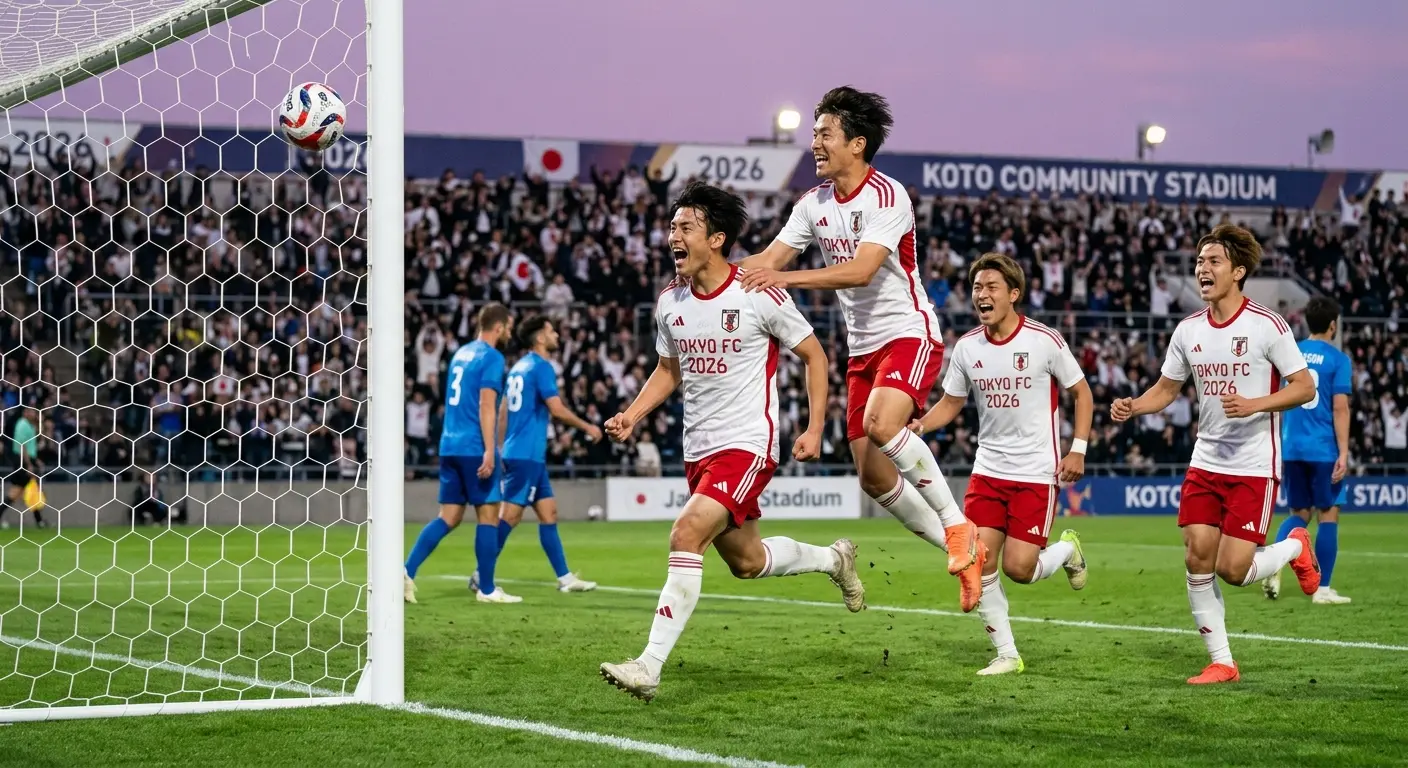
You are sitting down to watch your first soccer match. The whistle blows, players start running, the crowd roars, and within minutes something happens that you do not quite understand. The referee stops play, points somewhere, and the crowd either cheers or groans.
What just happened? Why did play stop? What happens next?
If this sounds familiar, this guide is for you.
Understanding how a soccer game works from start to finish will completely transform how you watch and enjoy the sport. By the end of this guide you will know exactly what is happening on the pitch at every moment, and why.
Before the Game Starts
The Team Sheet
Before every match, each manager submits a team sheet, the official list of players starting the match and the substitutes available on the bench. In most professional competitions, teams name:
- 11 starting players
- Up to 15 substitute players on the bench (though only a limited number can actually play)
The team sheet is announced around an hour before kickoff and is immediately analysed by fans, pundits, and journalists for tactical clues about how each manager plans to approach the match.
The Coin Toss
Before kickoff, the two team captains and the referee meet in the centre circle for a coin toss. The winning captain chooses either:
- Which end of the pitch their team attacks in the first half
- Or the right to take the kickoff
The teams switch ends at half-time, so whichever end a team defends in the first half, they will attack that same end in the second half.
The Warm-Up
Players typically arrive on the pitch 30 to 45 minutes before kickoff for a structured warm-up. This includes passing drills, shooting practice, stretching, and tactical shape work. Goalkeepers warm up separately with their goalkeeping coach, practising saves, distribution, and command of the penalty area.
Kickoff: How the Game Begins
The match begins with a kickoff from the centre spot, the exact centre of the pitch.
How kickoff works:
- The ball is placed on the centre spot
- Players from both teams take up their positions, attackers in their own half, defenders spread across the pitch
- All opposition players must be outside the centre circle until the ball is kicked
- The referee blows the whistle and the team taking kickoff passes the ball to start play
- The ball must move forward on the kickoff
- After a goal is scored, the team that conceded restarts with a kickoff
- At the start of the second half, the team that did not kick off first takes the kickoff
The Two Halves
A standard soccer match is divided into two halves of 45 minutes each.
First Half
Play runs continuously for 45 minutes. The referee keeps track of time, and adds additional minutes at the end to compensate for time lost during the half (more on this below).
Half-Time
When the first half ends, both teams leave the pitch for a half-time break of typically 15 minutes. During this time:
- Players rest, rehydrate, and receive medical treatment if needed
- The manager delivers a team talk, analysing what went wrong or right in the first half and adjusting the tactical plan
- Substitutions can be made at half-time
- Teams switch ends, they now attack the opposite goal
Second Half
The second half begins with a kickoff from the team that did not start the first half. Play again runs for 45 minutes plus stoppage time.
Stoppage Time: Why Games Run Longer Than 90 Minutes
This confuses many new fans. The clock on screen might show 90 minutes but the match keeps going. Why?
In soccer the clock never stops during the match, unlike American football or basketball where the clock pauses every time play stops.
Instead, the referee keeps track of time lost during the match, for injuries, substitutions, goal celebrations, VAR checks, time wasting, and adds it to the end of each half as stoppage time (also called added time or injury time).
A board showing the minimum number of added minutes is held up by the fourth official on the sideline as the 45th and 90th minutes approach.
Stoppage time typically ranges from 1 to 10 minutes per half in normal matches, but in recent seasons FIFA has encouraged referees to add more time to compensate for all stoppages, meaning 8 to 12 minutes of added time at the end of the second half is now common in major competitions.
The referee, not the clock, decides exactly when to blow the final whistle. They may play slightly more or slightly less than the indicated added time at their discretion.
Scoring: How Goals Work
A goal is scored when the entire ball crosses the goal line between the two posts and under the crossbar. Even if the ball only crosses the line for a fraction of a second before bouncing back out, if it fully crossed, it is a goal.
Goal Line Technology
In top professional leagues, Goal Line Technology (GLT) uses a system of cameras positioned around each goal to determine instantly and definitively whether the ball crossed the line. The referee receives a vibration and signal on their watch within one second confirming whether a goal has been scored.
VAR Goal Checks
After every goal in competitions using Video Assistant Referee (VAR) technology, the goal is automatically checked for:
- Offside in the build-up
- Handball in the build-up
- Foul in the build-up
If no issue is found, the goal stands. If an issue is found, the VAR team contacts the on-field referee who may review the footage on a pitchside monitor before making a final decision.
This process typically takes between 30 seconds and 3 minutes.
What Happens When Play Stops
Play in soccer stops and restarts in several different ways depending on what caused the stoppage.
Free Kicks
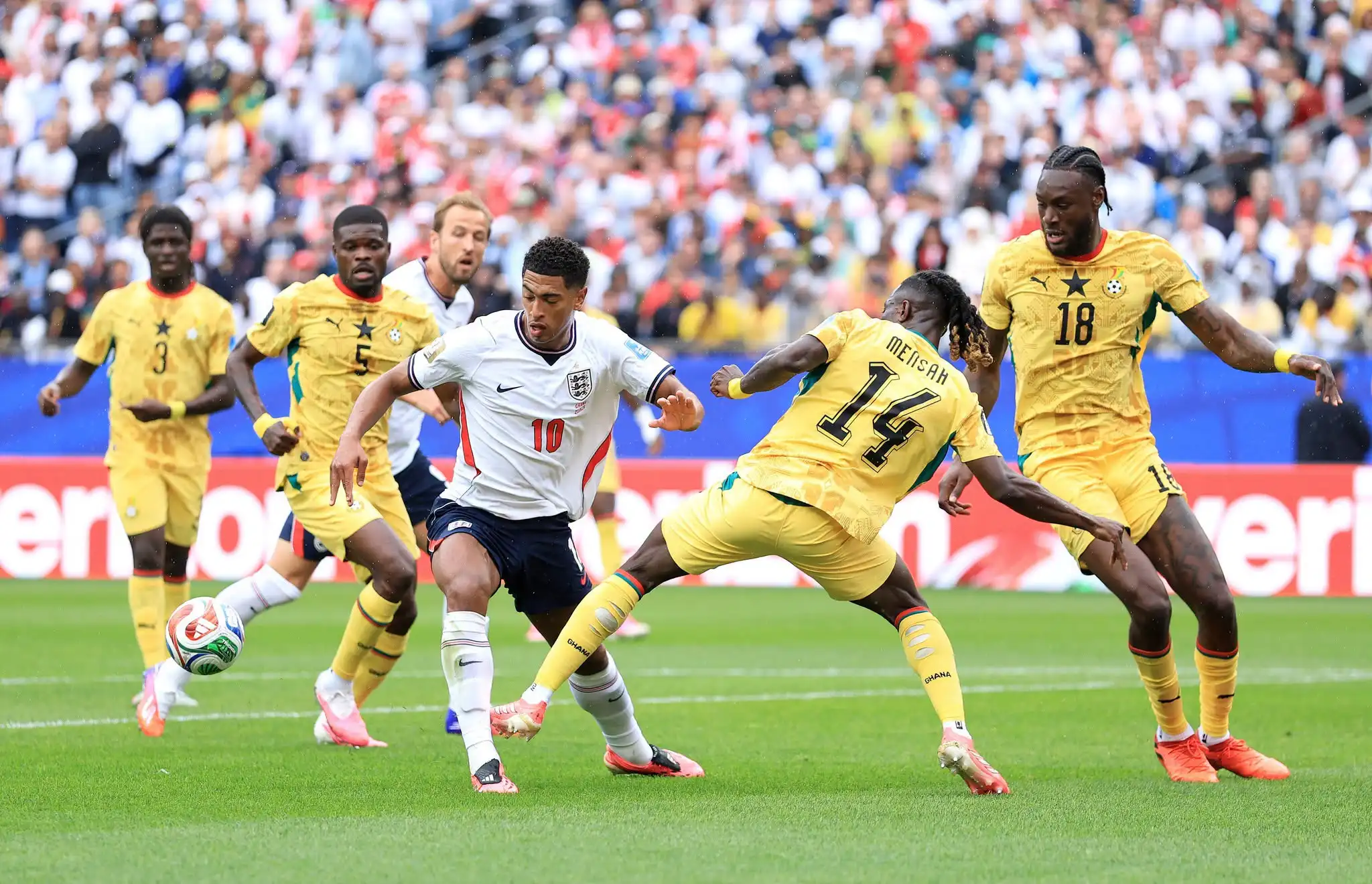
When a foul or rule violation occurs, the referee stops play and awards a free kick to the opposing team from the spot where the offence happened.
- Direct free kick — can be kicked straight into goal
- Indirect free kick — must touch another player before a goal can be scored
Throw-Ins
When the ball goes out of play over the sideline (touchline), a throw-in is awarded to the team that did not touch the ball last. The player takes the throw with both hands from behind and over their head with both feet on or behind the line.
Goal Kicks
When the attacking team puts the ball out of play over the opponent’s goal line (not into the goal), a goal kick is awarded to the defending team. The goalkeeper places the ball anywhere in the goal area and kicks it back into play.
Corner Kicks
When the defending team puts the ball out of play over their own goal line, a corner kick is awarded to the attacking team. The ball is placed in the corner arc and kicked back into the field of play. A goal can be scored directly from a corner.
Penalty Kicks
When a player commits a foul inside their own penalty area that would normally result in a direct free kick, a penalty kick is awarded instead. The ball is placed on the penalty spot 12 yards from goal and one player takes a one-on-one shot against the goalkeeper.
Drop Ball
If play is stopped for a reason not related to a foul or the ball going out, such as an injury, the referee restarts with a drop ball. The ball is dropped to a player from the team that last had possession.
Substitutions: Changing Players During the Match
During a match, managers can replace players on the pitch with substitute players from the bench.
Key rules about substitutions:
- Each team is allowed 5 substitutions per match in most professional competitions
- Substitutions can only be made when play is stopped
- Once a player is substituted off, they cannot return to the match
- Substitutions must be reported to the fourth official on the sideline before the player can enter the pitch
- A substitution board is held up showing the number of the player coming off and the number of the player coming on
Why Managers Make Substitutions
- Tactical change — switching to a different formation or style of play
- Injury — replacing a player who is hurt
- Fatigue — bringing on a fresh player for a tired one
- Game situation — adding an attacker when chasing a goal, or adding a defender to protect a lead
Yellow and Red Cards: Discipline
The referee uses cards to discipline players for serious or repeated rule violations.
Yellow Card
A yellow card is a formal warning. It is shown for fouls, dissent, time wasting, diving, or unsporting behaviour. A player who receives two yellow cards in the same match is automatically shown a red card and must leave the pitch.
Red Card
A red card means the player is sent off immediately and cannot be replaced, their team plays with 10 players for the rest of the match. A red card is shown for violent conduct, serious foul play, spitting, or denying an obvious goalscoring opportunity.
Bookings Accumulation
In league competitions, yellow cards accumulated across multiple matches also lead to automatic suspensions. For example in the Premier League, a player who receives 5 yellow cards in the first 19 matches of the season receives a one-match ban.
Extra Time and Penalty Shootouts
In knockout competitions where a winner must be decided on the day, such as cup matches or tournament knockout rounds, if the score is level after 90 minutes the match goes to extra time.
Extra Time
Two additional periods of 15 minutes each are played. Teams switch ends between the two periods of extra time but there is no break, just a short pause for players to rest and receive instructions.
If the score is still level after extra time, the match is decided by a penalty shootout.
Penalty Shootout
Each team nominates 5 penalty takers who take turns shooting from the penalty spot against the opposing goalkeeper. The team that scores the most penalties from their 5 kicks wins. If still level after 5 kicks each, the shootout moves to sudden death, where teams alternate single kicks until one team scores and the other misses.
Penalty shootouts are one of the most dramatic and nerve-wracking moments in all of sport, decided by a combination of skill, nerve, and luck.
The Final Whistle
When the referee decides sufficient time has been played in the second half, including all stoppage time, they blow three short blasts on their whistle to signal the end of the match.
At this point:
- Players from the winning team celebrate
- Players shake hands with their opponents
- The result is official and points are awarded in league competitions
- Player of the Match is typically announced
Points System in League Competitions
| Result | Points Awarded |
|---|---|
| Win | 3 points |
| Draw | 1 point each |
| Loss | 0 points |
Teams accumulate points throughout the season. The team with the most points at the end of the season wins the league title.
A Complete Match: Step by Step Summary
Here is the complete flow of a soccer match from start to finish:
| Stage | What Happens |
|---|---|
| Pre-match | Team sheets announced, warm-ups, coin toss |
| Kickoff | Match begins from centre spot |
| First half | 45 minutes of play plus stoppage time |
| Half-time | 15-minute break, teams switch ends |
| Second half | 45 minutes of play plus stoppage time |
| Full time | Referee blows final whistle — result is official |
| Extra time | 2×15 minutes if knockout game is level (optional) |
| Penalty shootout | If still level after extra time (optional) |
Frequently Asked Questions
Why does the clock keep running when a player is injured?
In soccer the clock never officially stops. The referee notes the time lost and adds it on at the end of the half as stoppage time. This keeps the game flowing continuously rather than stopping and starting like American football or basketball.
Can a team refuse to take a penalty shootout?
No. If a knockout match reaches a penalty shootout both teams must participate. There is no alternative.
What happens if a team has fewer than 7 players?
If a team is reduced to fewer than 7 players through red cards or injuries, and has used all their substitutions, the match is abandoned and the result is determined by competition rules. This is extremely rare in professional soccer.
How does a team win the league?
By accumulating the most points across all matches in the season. Three points for a win, one for a draw, zero for a loss. If two teams finish level on points, the title is usually decided by goal difference, the total goals scored minus goals conceded across the season.
What is a clean sheet?
A clean sheet is when a team, or specifically a goalkeeper, completes a match without conceding a single goal. It is one of the most prized statistics for defenders and goalkeepers.
Can the referee change a decision after play restarts?
No. Once the referee has restarted play, a decision cannot be changed, except in competitions using VAR where certain decisions can be reviewed within a specific window after the event.