
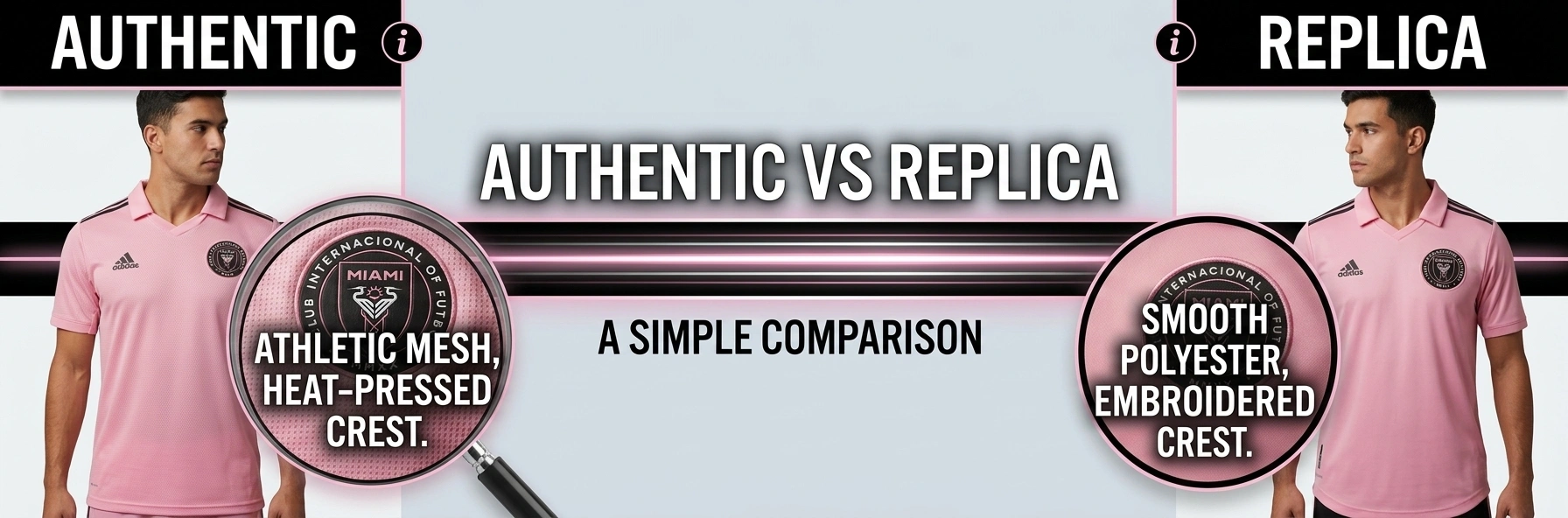
You have decided to buy a soccer jersey. You go to the official club store or a sports retailer, find the jersey you want, and then notice something confusing. There are two versions of the same shirt at very different prices. One costs $90. The other costs $160. They look almost identical in the product photos.
What exactly is the difference? Which one is right for you? And is the more expensive one actually worth the extra money?
These are the questions this guide answers completely. By the time you finish reading you will know exactly what separates an official authentic jersey from a replica fan jersey, why the price gap exists, and how to make the right buying decision for your specific situation without wasting money.
The Three Types of Soccer Jersey You Will Encounter
Before comparing authentic and replica jerseys it helps to understand that there are actually three distinct categories of soccer jersey on the market. Knowing which category a jersey falls into tells you almost everything you need to know about its quality and value.
Type 1: Authentic Player Version
The authentic player version, also called the match jersey or player version, is the exact same jersey worn by professional players during competitive matches. It is produced by the official kit manufacturer, carries all official licensing, and is built to the exact specifications of what you see on the pitch.
When Kylian Mbappe walks out at the Bernabeu for a Champions League match, he is wearing the authentic player version of Real Madrid’s jersey. The one available for fans to buy from the official store is technically identical.
Type 2: Replica Fan Version
The replica fan version is an officially licensed jersey produced by the same manufacturer to a slightly different specification designed for everyday fan wear. It looks almost identical to the authentic version from a distance and carries all the same official branding, badges, and sponsor logos. The differences are in the technical construction rather than the visual appearance.
Type 3: Counterfeit
Counterfeit jerseys are not officially licensed. They are produced without authorisation from the club, the manufacturer, or any official body. They typically mimic the design of official jerseys but use lower quality materials and unofficial manufacturing. They do not carry genuine manufacturer logos or official licensing labels.
This guide focuses on the comparison between authentic and replica jerseys, both of which are official products. The counterfeit category is covered later in a separate section.
The Key Differences Between Authentic and Replica Jerseys
Fabric and Material
This is the most significant technical difference between the two versions and the primary reason for the price gap.
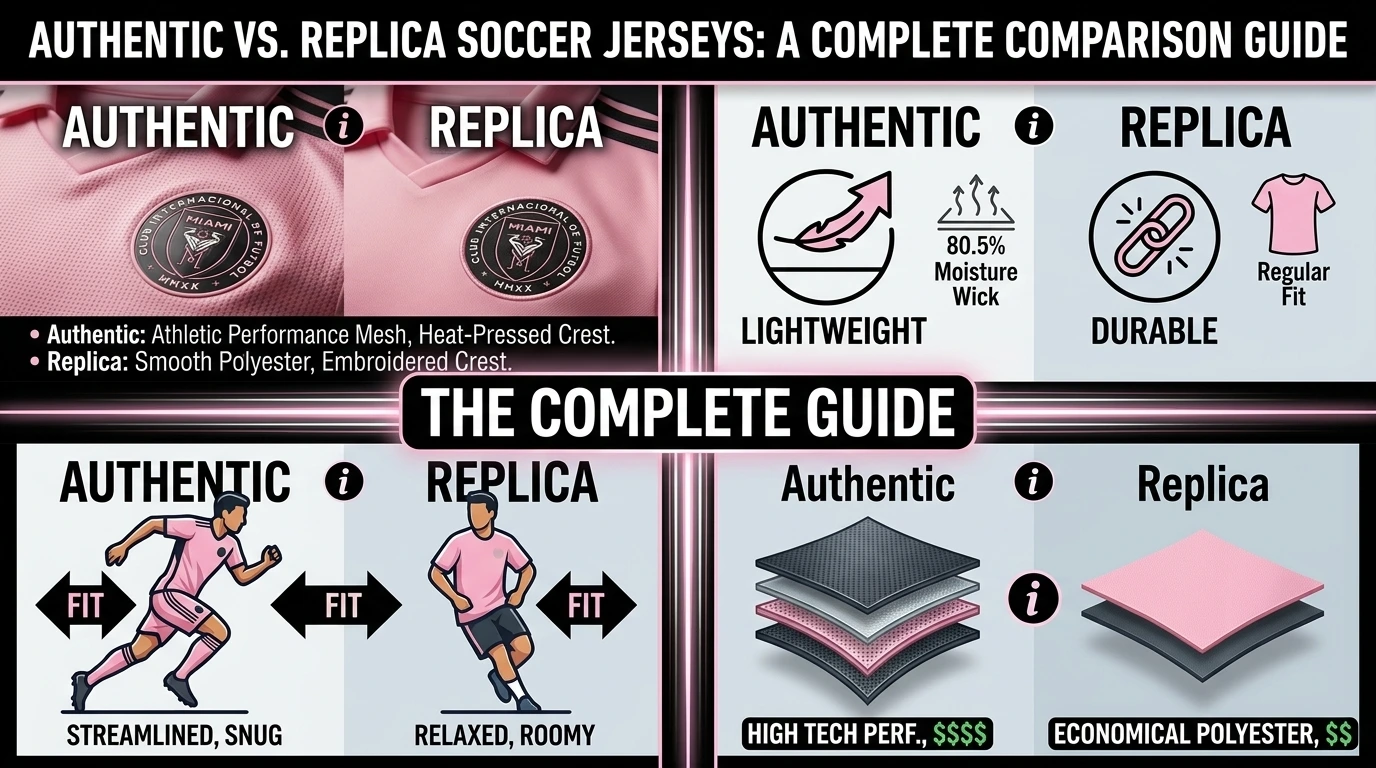
Authentic player version fabric: Player jerseys use high-performance technical fabrics developed specifically for elite athletic performance. These fabrics are extremely lightweight, often feeling almost weightless when held. They use advanced moisture-wicking technology that moves sweat away from the body quickly and allows it to evaporate efficiently. The fabric is engineered to minimise drag and friction while allowing maximum range of movement. Nike calls their authentic fabric Dri-FIT ADV. Adidas uses HEAT.RDY and AEROREADY technology. Puma uses their ULTRAWEAVE construction for premium kits.
Replica fan version fabric: Replica jerseys use high-quality but more conventional polyester blends. These fabrics are still breathable and comfortable and will keep you reasonably cool during wear. They are significantly more durable for regular everyday use than the ultra-thin player versions, which prioritise performance over longevity. The replica fabric is designed to look great, wash well, and last for several years of regular wearing.
In simple terms: the authentic fabric is optimised for a professional athlete playing 90 minutes of intense physical activity. The replica fabric is optimised for a fan wearing the shirt to a match, to work, or out with friends.
Fit and Cut
The fit difference between authentic and replica jerseys is one of the most practically important differences for buyers to understand, and it is also the most common cause of returns.
Authentic player version fit: Player jerseys are cut extremely close to the body. They are designed to fit like a second skin, minimising loose fabric that could catch on an opponent or create drag. If you hold an authentic jersey up, it will look noticeably narrower and shorter than a replica of the same stated size. When worn by someone with an athletic build it fits like a compression garment.
If you have an average or larger body type and buy an authentic jersey in your normal size, it may feel uncomfortably tight. Most people buying an authentic jersey for fan wear should consider sizing up one full size from their normal measurement.
Replica fan version fit: Replica jerseys have a more relaxed, regular cut that is similar to a standard casual shirt or athletic top. They sit looser on the body and are more comfortable for extended everyday wear. The length is typically slightly longer and the shoulders and chest have more room.
For most fans, the replica fit is simply more practical and more comfortable for how they will actually wear the jersey.
Badges and Details
Both authentic and replica jerseys carry official club badges and manufacturer logos. However the method of attachment and the level of detail can differ between versions.
Authentic version details: High-end authentic jerseys often have fully stitched badges, raised or embossed detailing on manufacturer logos, and heat-transferred printing that uses multiple layers to create a more tactile, three-dimensional finish. Some authentic versions also include additional technical features like ventilation perforations in specific areas of the fabric and internal taping at stress points.
Replica version details: Replica jerseys typically have officially stitched club badges too, but the manufacturer logo may use a simpler heat-transfer method. Sponsor logos are usually printed rather than stitched. The overall finish is slightly flatter than the authentic version but still official and still clearly recognisable as the genuine product.
Price
The price difference between authentic and replica jerseys is significant and consistent across all major manufacturers.
| Jersey Type | Typical Price Range |
|---|---|
| Authentic player version | $120 to $200+ |
| Replica fan version | $60 to $110 |
| Counterfeit | $15 to $40 |
The authentic version typically costs between 45 and 70 percent more than the replica. For major clubs with high-demand kits the authentic version can cost twice as much as the replica.
How to Tell Authentic and Replica Apart When Shopping
Look at the Product Name
Kit manufacturers are consistent in how they name their products. Learning to read these names quickly tells you which version you are looking at.
Nike naming conventions:
- Authentic (player version): Dri-FIT ADV Match Jersey
- Replica (fan version): Stadium Jersey or Replica Jersey
Adidas naming conventions:
- Authentic (player version): Authentic Jersey or Player Version
- Replica (fan version): Replica Jersey or Fan Version
Puma naming conventions:
- Authentic (player version): ULTRAWEAVE Authentic Match Jersey
- Replica (fan version): Replica Jersey or Fan Jersey
If the product name does not clearly state which version it is, look for the fabric technology listed in the product description. Mentions of ADV, ULTRAWEAVE, or other performance-specific fabric names indicate the player version.
Check the Price
While this is not a foolproof method, price is a useful quick indicator. If a jersey for a major club is priced significantly below what you would expect from a replica, it is unlikely to be an official product of either type.
Feel the Weight
If you are buying in person, authentic jerseys feel noticeably lighter than replica jerseys when held. The ultra-thin technical fabric of the player version is one of its most immediately noticeable physical characteristics.
Check for the Official Licensing Label
Both authentic and replica jerseys carry an official licensing label, usually located at the hem of the shirt or inside the collar. This label confirms the jersey is an officially licensed product. It typically includes a hologram or serialised code. If this label is missing or looks poorly printed, treat it as a warning sign.
Which Type is Right for You?
The right choice depends entirely on your specific situation, how you plan to wear the jersey, and your budget.
Choose Authentic If
You want to own the exact same jersey the players wear on the pitch. You have an athletic build and the slim fit will suit you. You are a serious collector and want the highest specification version. You plan to frame it or display it rather than wear it regularly. Budget is not a primary concern.
Choose Replica If
You want a great looking official jersey at a more accessible price. You plan to wear it regularly for matches, casual outings, or everyday use. You want something that will last well through multiple washes over several years. You are buying for a child who will grow out of it quickly. You have a larger or more average body type and want a comfortable everyday fit.
The honest truth is that for the vast majority of fans, the replica jersey offers better practical value. It looks almost identical to the authentic version when worn, it is significantly more affordable, and it is actually more durable for regular fan use than the performance-optimised player version.
Understanding Jersey Versions for Different Competitions
Most major clubs release jerseys across multiple competitions throughout the season. Understanding how these work helps you make sure you are buying the correct version.
Home jersey: The primary jersey worn in home matches, typically in the club’s main traditional colour.
Away jersey: Worn in away matches when the home jersey conflicts with the opponent’s colours. Usually in a contrasting colour or white.
Third jersey: A third alternative option used when both home and away jerseys conflict with opposition colours. Often the most creative and experimental design of the three.
Special edition jerseys: Some clubs release additional jerseys for specific occasions such as cup finals, anniversary seasons, or charity initiatives. These are usually produced in limited quantities and can become valuable collector’s items.
Pre-match training jersey: A separate training top worn during warm-up. This is not the same jersey worn during the match but is often produced in matching colours and design.
Jersey Sizing: A Practical Guide
Getting the size right before you buy is critically important, particularly when buying online. Jersey sizing varies between manufacturers and between the authentic and replica versions of the same jersey.
General Sizing Guidance
For replica jerseys, most people should start with their normal clothing size and check the official size chart. Replica jerseys generally follow standard sizing conventions for the manufacturer.
For authentic jerseys, most people should go one size up from their normal clothing size. The slim athletic cut of the player version runs significantly smaller than standard sizing.
Adidas Sizing
Adidas replica jerseys tend to fit true to size or slightly slim. Their authentic versions run very small, most people with a non-athletic build should size up by one to two sizes.
Nike Sizing
Nike replica jerseys generally fit slim to true to size. Their authentic Stadium versions run a little slim. Their high-end authentic ADV player jerseys are cut extremely close to the body and most fans should size up by at least one size.
Puma Sizing
Puma replica jerseys tend to fit slightly more generously than Nike or Adidas equivalents. Their authentic versions run slim but not as extremely so as the Nike ADV versions.
Always Measure Yourself
Whatever the manufacturer or version, always measure your chest circumference and check it against the specific size chart provided on the retailer’s product page. Do not rely purely on your usual clothing size, as jersey sizing can vary significantly between manufacturers and between seasons.
Caring for Your Soccer Jersey
Whether you bought the authentic player version or the replica, proper care extends the life of your jersey significantly.
Washing: Always wash soccer jerseys inside out in cold water on a gentle cycle. Hot water and aggressive washing cycles can cause the fabric to shrink, the print to crack, and the badges to loosen.
Drying: Never tumble dry a soccer jersey. High heat damages technical fabrics and can shrink the jersey permanently. Always air dry flat or on a hanger away from direct sunlight.
Ironing: Never iron directly onto printed or sponsor logos. If you need to iron the jersey, do so inside out on the lowest heat setting only.
Storage: Store jerseys folded rather than on hangers for extended periods, as hanging can stretch the fabric over time, particularly around the shoulders and collar.
Numbering and names: If your jersey has printed player names and numbers, be particularly gentle when washing and drying to prevent the printing from cracking or peeling.
Frequently Asked Questions
Is it worth paying extra for an authentic jersey?
For most fans, no. The replica jersey looks almost identical when worn, is more comfortable for everyday use, and is significantly more affordable. The authentic player version is worth the premium if you specifically want the exact jersey the players wear, you have an athletic build that suits the slim fit, or you are a serious collector.
Do authentic jerseys last longer than replicas?
No. This is a common misconception. Authentic jerseys use ultra-thin performance fabrics optimised for athletic use during matches. This fabric is not designed for repeated everyday washing and wear. Replica jerseys use more conventional fabrics that typically hold up better over multiple years of regular fan use.
Can I tell the difference between authentic and replica in photos?
Usually no. Both look very similar in product photos and from a distance when worn. The differences in fabric weight, fit, and technical details are only apparent when you hold or wear both versions side by side.
What is a third jersey?
A third jersey is an alternative jersey released by a club for use when both their home and away jerseys would clash with an opponent’s colours. Most top clubs release three jerseys per season. Third jerseys are often more creatively designed than home and away versions.
Do replica jerseys have official badges and logos?
Yes. Replica jerseys are officially licensed products produced by the same manufacturer as the authentic version. They carry genuine official club badges and manufacturer logos. The only jerseys that do not carry genuine logos are counterfeits, which are not officially licensed.
Where is the safest place to buy official soccer jerseys online?
The safest places to buy official jerseys are the official club stores, the manufacturer’s own websites such as Nike.com and Adidas.com, and established licensed sports retailers. Buying from these sources guarantees you are getting a genuine officially licensed product.