
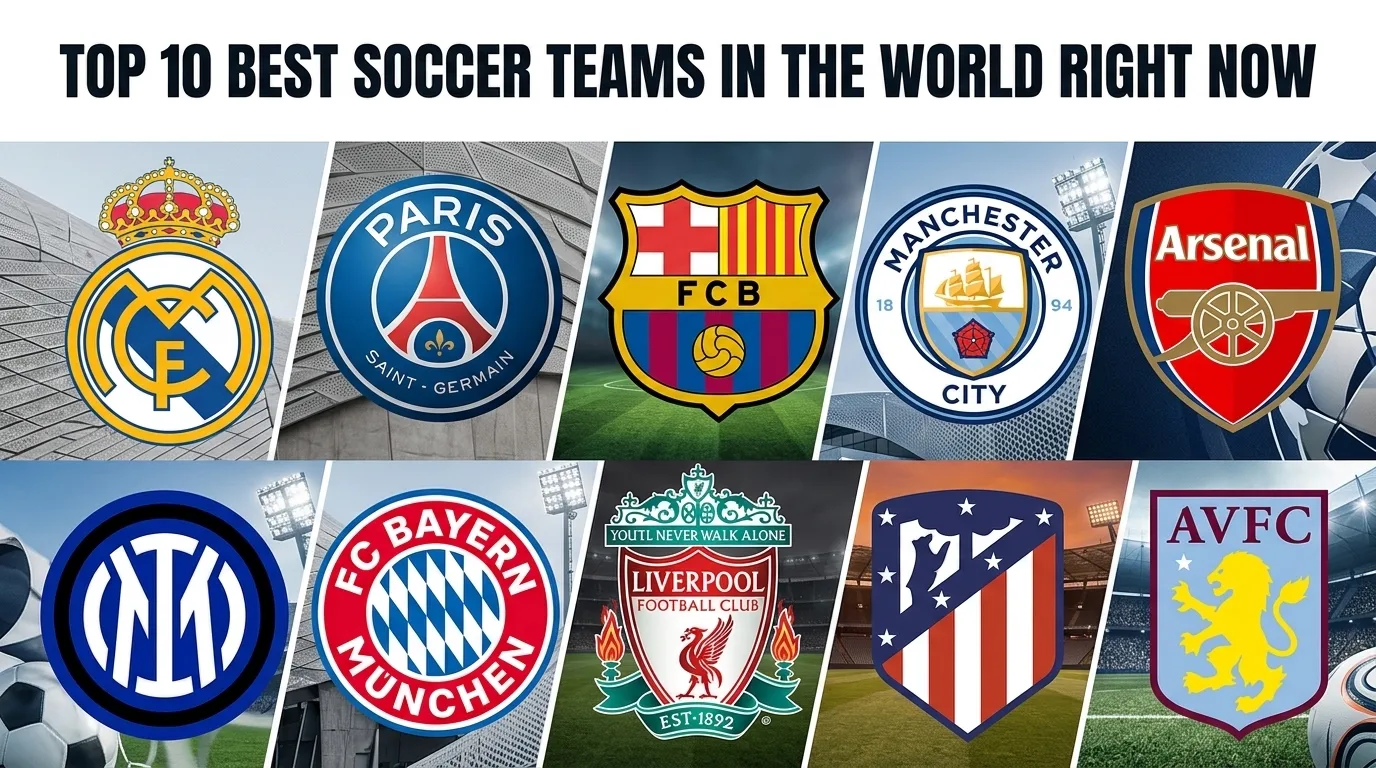
Every soccer fan has a favourite team and every fan believes their club belongs near the top of any honest ranking. But when you strip away club loyalty and look at the actual evidence — trophies won, squad quality, recent form, European pedigree, and global influence — a clear picture begins to emerge of which clubs genuinely stand above the rest in 2026.
This is not a historical ranking of the most successful clubs across all of soccer history. This is a current assessment of which clubs are the most dominant, the most complete, and the most feared right now. The list will surprise some people. It will irritate others. That is what a good ranking should do.
Here are the ten best soccer clubs in the world in 2026.
How We Ranked These Teams
Before diving into the list it is worth being transparent about the criteria used. A team earns its place here based on a combination of the following factors:
Recent trophies: What have they actually won in the last two to three years, not what they won a decade ago.
Squad quality: The depth and calibre of players available to the manager, not just the one or two stars on the poster.
European performance: The Champions League remains the most reliable measure of elite club quality because it forces teams to beat the best clubs from across the continent.
Consistency: A team that wins one title then disappears is less impressive than a team that contends for honours year after year.
Manager: Elite clubs need elite coaches, and the quality of the manager shapes everything a club does on the pitch.
With those criteria in mind, here is the ranking.
1. Real Madrid: Spain
There is a reason Real Madrid are the most decorated club in Champions League history, with 15 titles to their name heading into the 2026-27 season. Year after year, regardless of squad changes, managerial transitions, and the natural cycles of football, Real Madrid find a way to compete at the highest level and deliver when the pressure is greatest.
What Makes Them Special
The club’s ability to attract and retain world-class talent is unmatched. Their squad for the 2026-27 Champions League campaign includes some of the most recognisable players on the planet, and the Santiago Bernabeu provides one of the most intimidating atmospheres in world soccer.
Real Madrid sent ten players to the 2026 World Cup, a figure that reflects their quality but also points to a squad that was in transition compared to clubs like Manchester City and Arsenal who sent considerably more. That transition, however, has historically only made Madrid stronger as they rebuild around new talent.
Their obsession with the Champions League is the thing that sets them apart from most rivals. While other clubs treat domestic leagues as the primary target and Europe as a bonus, Madrid treat the opposite as true. That mentality produces results.
2. Paris Saint-Germain: France
PSG arrives at number two having won the UEFA Champions League and claimed the status of reigning European champions heading into 2026-27. That achievement alone earns them enormous respect in any current ranking, and it reflects the culmination of years of significant investment in squad quality and the recruitment of world-class players.
The PSG Transformation
For much of their recent history, PSG were seen as a club that bought superstars but could not translate individual brilliance into collective European success. That perception has now changed. The club has developed a more cohesive team identity while retaining the individual quality that has always been their calling card.
PSG sent 16 players to the 2026 World Cup, one of the highest totals of any club in the world, which is a clear reflection of the international calibre running through their squad. Ousmane Dembele was one of the standout performers at the tournament, announcing himself as one of the most dangerous wide players in global football.
Their 2026-27 Champions League path is not easy. They face Barcelona and Manchester City in the league phase, which makes their group the most difficult draw of the entire competition. How they handle that challenge will tell us a great deal about their credentials as genuine back-to-back contenders.
3. FC Barcelona: Spain
Barcelona’s presence at number three reflects the remarkable resurgence of a club that spent the early part of this decade dealing with severe financial difficulties while trying to maintain their position among Europe’s elite. They have, in large part, succeeded.
The Barca Revival
The club sent 15 players to the 2026 World Cup and had the highest number of any single club with players reaching the tournament semifinals, with ten Barcelona players making it to the final four. That statistic is a powerful indicator of squad quality. Players do not reach World Cup semifinals by accident.
Spain won the 2026 World Cup with a 1-0 victory over Argentina in the final, and the Barcelona core was central to that triumph. La Roja’s success naturally elevated the profile and confidence of Barcelona’s Spanish players heading into the new club season.
On the attacking side, Barcelona have been described as an attacking force to be reckoned with in recent Champions League campaigns. The question that has followed them in European competition is whether their defensive resilience, particularly in transition, matches their offensive brilliance. Addressing that imbalance is the key to taking the next step.
4. Manchester City: England
Manchester City sent more players to the 2026 World Cup than any other club in the world, with 19 representatives spread across 12 different national teams. That figure is the most compelling single statistic in any discussion about which club currently has the deepest global talent pool.
Pep Guardiola’s Machine
Under Pep Guardiola, Manchester City have become the benchmark for tactical sophistication in the modern game. Their consistency in reaching the final stages of both the Premier League and the Champions League over the past several years is a record few clubs can match. They approach every game with a clarity of purpose and a precision of execution that reflects years of development under one of the greatest coaches in soccer history.
Their squad for 2026-27 includes players like Erling Haaland, Rodri, Bernardo Silva, and a deep supporting cast capable of competing across four competitions simultaneously. The fact that they were placed in the same Champions League group phase section as PSG and Barcelona tells you everything about where the rest of Europe’s clubs view them.
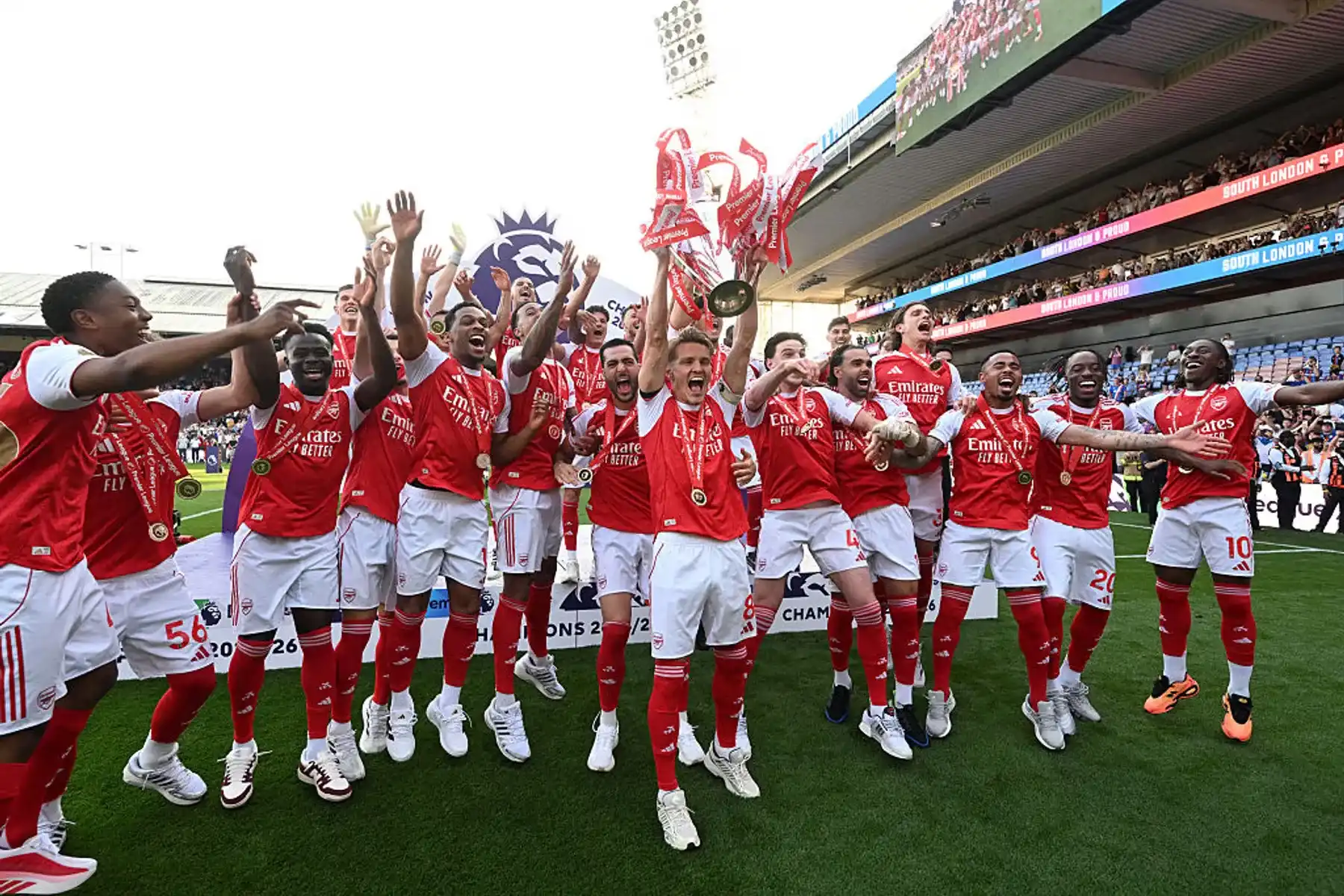
5. Arsenal: England
Arsenal’s inclusion in the top five will not surprise anyone who has followed club soccer closely over the past two or three years. The club has undergone one of the most impressive sustained transformations in the Premier League and now sit firmly among the world’s genuine elite.
The Arteta Era
Under Mikel Arteta, Arsenal have developed a playing identity built on high intensity pressing, technical excellence, and remarkable cohesion across the squad. They sent 16 players to the 2026 World Cup, level with PSG and behind only Manchester City, and their players performed at a high level throughout the tournament with eight reaching the semifinals.
In the 2026-27 Champions League, Arsenal face Real Madrid and Inter Milan in their section, a draw that would have seemed impossibly difficult for the Arsenal teams of a few years ago but which the current squad approaches with genuine confidence. Winning the Premier League is no longer a distant dream for Arsenal but an expectation, and European glory is the next target.
6. Inter Milan: Italy
Inter Milan have established themselves firmly as Italy’s leading club and one of Europe’s most consistent performers over the past three to four years. Their presence in the top six of any current world ranking reflects a squad built on defensive solidity, tactical intelligence, and the ability to perform under pressure in the knockout stages of European competition.
Italy’s Standard Bearers
Simone Inzaghi has built a team that combines the traditional Italian defensive virtues with a genuinely threatening attacking approach. Players like Lautaro Martinez and Denzel Dumfries, the latter impressing enormously at the 2026 World Cup with two assists in a single Netherlands victory, give Inter both the goals and the creativity to trouble any opponent in Europe.
Their 2026-27 Champions League group places them alongside Real Madrid, which is among the most anticipated clashes in the league phase. Whether Inter can consistently go toe to toe with Madrid over the course of a full European campaign remains to be seen, but the quality is clearly there.
7. Bayern Munich: Germany
Bayern Munich’s place at number seven in this ranking represents the first time in many years that the German giants have not appeared higher in a current assessment of world soccer’s best clubs. That is not a reflection of decline so much as it is a reflection of how competitive the top of the global club game has become in 2026.
Germany’s Constant Force
Bayern sent 18 players to the 2026 World Cup, second only to Manchester City, which underlines the extraordinary international quality they have assembled. Michael Olise was one of the French national team’s standout performers at the tournament, further cementing his reputation as one of the most exciting wide players in European soccer.
Domestically, Bayern continue to dominate the Bundesliga with a consistency that no other club in any major European league can quite match. Their challenge has consistently been to translate that domestic dominance into Champions League success, and their 2026-27 section includes Arsenal which will be one of the most keenly anticipated matchups in the competition’s early stages.
8. Liverpool: England
Liverpool’s position at number eight is the result of a club going through a significant transitional period while maintaining the core strength that made them one of Europe’s elite clubs under Jurgen Klopp. The post-Klopp era has brought new challenges and a new direction, but the underlying quality of the squad remains formidable.
Rebuilding Without Losing Identity
Liverpool’s talent base remains among the deepest in England. They sent 11 players to the 2026 World Cup, which reflects an international squad of genuine quality, and their ability to attract and develop elite players has not diminished.
The club’s biggest challenge in 2026-27 is reestablishing the ruthless consistency they demonstrated at their peak. When Liverpool are at their best they are capable of beating anyone in the world. The question is whether they can achieve that level of performance week after week across a full season and into the latter stages of European competition.
9. Atletico Madrid: Spain
Atletico Madrid deserve their place among the world’s top ten clubs in 2026 on the back of a season and a World Cup campaign that reinforced their status as one of the most competitive clubs in Europe. They sent 12 players to the World Cup and eight reached the semifinals, matching Arsenal for the second-highest number of semifinalists from any single club.
The Simeone Effect
Diego Simeone has now been Atletico Madrid’s manager for well over a decade, an extraordinary tenure in an era when most elite clubs change managers every two or three years. His ability to maintain Atletico’s competitive intensity across such a long period speaks to an exceptional coaching intelligence and a squad culture that has become one of the defining features of modern European soccer.
Atletico are nobody’s favourite to win the Champions League but they are almost everyone’s least favourite opponent to draw. That capacity to frustrate, disrupt, and ultimately defeat much-fancied opposition is worth a great deal in knockout competition.
10. Aston Villa: England
Aston Villa’s inclusion in a ranking of the world’s ten best clubs would have seemed extraordinary just a few years ago. Today it reflects the remarkable transformation of an English club that has risen from relegation battles to genuine European contenders in a relatively short period of time.
Villa’s Remarkable Rise
Villa sent five players to the 2026 World Cup semifinals, equal to Real Madrid, which is a remarkable achievement for a club of their size and relatively recent history at the elite level. They have qualified for the Champions League for consecutive seasons and are competing in the 2026-27 edition where they will face PSG and Manchester City in the league phase.
What Villa represent more broadly is the increasingly global and financially competitive nature of elite club soccer. A club with the right ownership, the right manager, and the right recruitment approach can now reach the game’s highest level in a shorter timeframe than was previously possible. Villa are the proof of that.
The Full Top 10 at a Glance
| Rank | Club | Country | League | Key Strength |
|---|---|---|---|---|
| 1 | Real Madrid | Spain | La Liga | European pedigree and winning mentality |
| 2 | Paris Saint-Germain | France | Ligue 1 | Reigning Champions League holders |
| 3 | Barcelona | Spain | La Liga | Squad depth and World Cup-winning core |
| 4 | Manchester City | England | Premier League | Tactical sophistication and squad size |
| 5 | Arsenal | England | Premier League | Cohesion, pressing, and consistency |
| 6 | Inter Milan | Italy | Serie A | Defensive solidity and European experience |
| 7 | Bayern Munich | Germany | Bundesliga | Domestic dominance and global talent |
| 8 | Liverpool | England | Premier League | Attacking quality and squad depth |
| 9 | Atletico Madrid | Spain | La Liga | Tactical resilience and manager stability |
| 10 | Aston Villa | England | Premier League | Rising force and Champions League regulars |
Frequently Asked Questions
Who is the number one soccer team in the world right now?
Real Madrid hold the strongest claim to that title in 2026 based on their Champions League record, squad quality, and consistent ability to perform when the stakes are highest. PSG are the reigning European champions which gives them a strong counter-argument. The honest answer is that the gap between the top four or five clubs in the world is smaller than it has ever been.
Which country has the most top teams in the world right now?
England leads with four clubs in this top ten, which reflects the Premier League’s status as the most financially powerful league in world soccer. Spain follows with three clubs, reflecting the continued strength of La Liga’s top teams.
Is Manchester City still the best team in England?
Manchester City remain a strong contender for that title based on squad depth and manager quality, but Arsenal have closed the gap significantly in recent seasons and the Premier League title race in 2026-27 looks set to be one of the most competitive in years. Both clubs have genuine claims to be England’s best right now.
Why is Real Madrid ranked above PSG if PSG won the Champions League?
Ranking current teams involves more than just the most recent trophy. Real Madrid’s consistent ability to perform at the highest level across many seasons, combined with their 15 Champions League titles and their ongoing squad quality, gives them a marginal edge in an overall assessment. PSG’s title is significant and exciting, and they are very close to Madrid at the top of any honest current ranking.
Are there any teams outside Europe in the top ten?
Not in this ranking, though clubs like Flamengo in Brazil and River Plate in Argentina are among the world’s most historically significant and currently competitive clubs outside of European football. The financial and competitive resources of the European leagues make it very difficult for clubs outside that ecosystem to feature in a genuine world top ten at club level.